Choosing the right lingerie fabric can be the difference between comfort and constant irritation, especially in the UAE's desert heat and Gulf humidity. This guide covers everything you need to know: the best plant-based fabrics for sensitive skin, what OEKO-TEX certification really means, and how to choose based on your specific skin concern, including PCOS, eczema, and menopause.
In this guide:
- What Sensitive Skin Needs from Lingerie
- Lingerie for PCOS, Menopause & Perimenopause
- The Best Fabrics for Sensitive Skin Lingerie in Hot Climates
- Why Fabric Certification Matters
- Seamless vs Stitched: Construction Matters as Much as Fabric
- How to Choose the Right Lingerie Fabric for Your Skin Concern
- How to Wash Sensitive Skin Lingerie
- Frequently Asked Questions
If your lingerie causes redness, itching, or rashes, the fabric is likely to blame. In the UAE's extreme heat and coastal humidity, the wrong material traps sweat against your skin. This can lead to irritation, rashes, and flare-ups.

This guide shows you which underwear and bra fabrics are best for sensitive skin. It also explains important certifications to look for. You'll learn how to pick plant-based underwear that feels soft and gentle on sensitive skin in hot and humid climates.
For product suggestions, check our companion guide: The Intimate Queen Guide to Choosing Lingerie for Sensitive Skin in the UAE & Hot Climates
What Sensitive Skin Needs from Lingerie

Sensitive skin reacts to friction, heat, moisture, synthetic materials, and chemical finishes, all amplified by the Gulf's climate where temperatures routinely exceed 45 °C and humidity can hit 90%. Effective sensitive-skin lingerie must address all of these, not just one or two. Look for:
- Breathable, sweat-wicking fabric that prevents moisture build-up
- Hypoallergenic materials that lower the risk of allergic reactions
- Seamless or stitch-free construction that eliminates friction and chafing
- OEKO-TEX certified, chemical-free fabric with no harmful dyes or finishes
- Wire-free bra designs that remove pressure points
- pH-supportive fabric that limits bacterial and odour build-up
- Natural fibre or plant-based fabric that is gentle on reactive or allergy-prone skin
Lingerie for Hormonal Skin: PCOS, Menopause & Perimenopause

Hormonal conditions significantly change how sensitive your skin is to fabric, friction, and temperature, and this is often underestimated when choosing lingerie.
During PCOS flare-ups, perimenopause, menopause, or cyclical PMS sensitivity, the skin's barrier function weakens, sebum production fluctuates, and body temperature regulation becomes less reliable. Fabrics that felt comfortable before a hormonal phase can cause reactions during it even if nothing about the garment has changed.
"Hormonal fluctuations in conditions like PCOS, perimenopause, and menopause often leave the skin drier, more delicate, and prone to irritation, especially with friction or tight-fitting garments. Many women notice they begin reacting to fabrics they once found comfortable, as these changes can weaken the skin's natural protective barrier. Opting for soft, breathable materials with seamless, wire-free, and minimal-stitch designs can help minimise irritation and improve overall comfort."
— Dr. Nandita P. Palshetkar, MD, DGO, FCPS, FICOG
Medical Director, Bloom IVF Centre
For this reason, ceramide-infused and anti-inflammatory plant-based fabrics are the strongest choice during hormonal phases. They offer measurable therapeutic support and not just comfort but by actively reinforcing the skin barrier and calming surface inflammation.
Experiencing hormonal skin changes? Explore our guide: How Body-Adaptive Briefs and Plant-Based Fabrics Support You During Hormonal Imbalance.
The Best Fabrics for Sensitive Skin Lingerie in Hot Climates
Not all natural fabrics provide the same benefits. The weave, source, and finish determine whether a fabric soothes or irritates reactive skin. Here is a comparison of the most effective options available today.

| Fabric | Primary Skin Benefit | Best For | Key Feature |
| Organic Cotton | Breathable, naturally low-allergenic | Daily wear, sensitive skin | Soft, familiar, widely available |
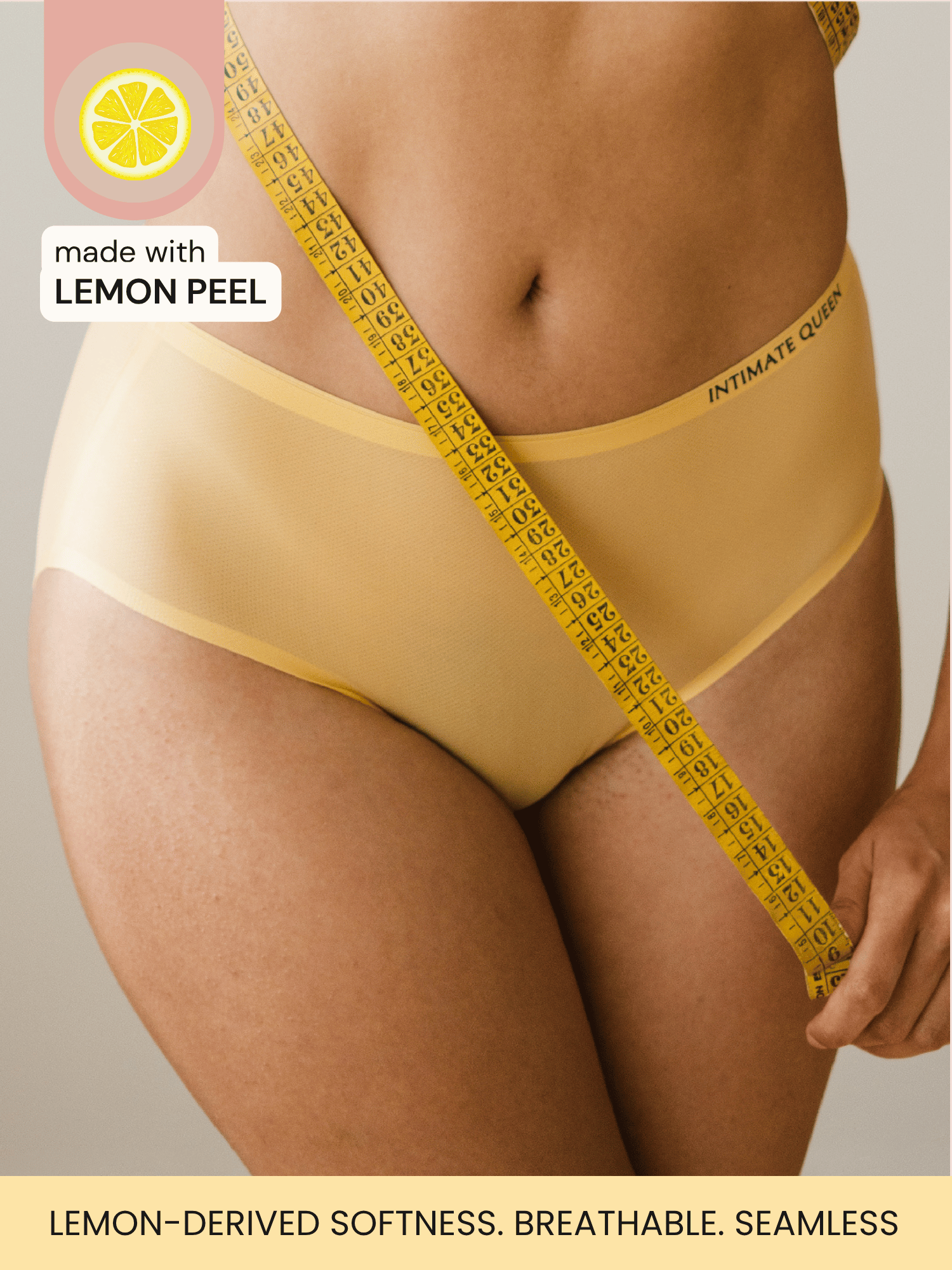
| Lemon Peel Fibre | Antibacterial, pH-balancing, quick-dry | Hot & humid climates, reactive skin | First-of-its-kind lemon-fibre seamless brief |
| Yew-Tree Extract (Taxol) | Anti-inflammatory, skin-calming | Eczema, rashes, post-workout recovery | Zero-seam construction: Yew Tree Hipsters |
| Corn (Bio-Based) Fibre | Faster sweat-wicking than cotton, cooling | Workouts, travel, UAE & Gulf heat | Wicks and dries faster than standard cotton: Corn Bae Boyshorts, Everyday Hipsters, Luxury High Rise Hipsters |
| Lenzing Modal | Silky, pH-neutral, eco-certified | Everyday all-day comfort | Austrian beechwood source: Modal Hipsters |
| Ceramide-Infused Fabric | Supports skin barrier, reduces friction | PCOS, menopause, hormonal phases, eczema | Same ceramides in dermatologist skincare: Ceramide Beauty Bra |
| Bamboo | Soft, naturally antibacterial | Sensitive or eczema-prone skin | Comparable in softness to Modal |
Lemon peel fibre, yew tree extract, and ceramide-infused fabric are the most innovative options available globally right now. Unlike standard cotton, these plant-based materials work with your skin. They help balance pH, calm inflammation, and restore the skin barrier with every wear.
Shop the fabrics mentioned above:


Why Fabric Certification Matters

Labels like 'natural' or 'soft' carry no regulatory standard. For sensitive skin, independent certification is the only reliable safety indicator.
OEKO-TEX Standard 100
Tested against 100+ harmful substances including chemical dyes, AZO compounds, formaldehyde, heavy metals, and pesticide residues. This is the most well-known textile safety certification worldwide and the key standard to look for when buying sensitive-skin lingerie.
GOTS (Global Organic Textile Standard)
Verifies that the entire production chain from raw fibre to finished fabric meets organic standards. Most relevant for cotton-based products.
Seamless vs Stitched: Construction Matters as Much as Fabric

Even the softest fabric causes irritation if it has exposed seam edges. Seams chafe against the skin with every movement. In the UAE's heat, sweat adds friction and can worsen rashes and pressure marks.
Circular knitting technology creates zero-seam or stitch-less underwear, a continuous tube of fabric with no cut edges or sewn seams. This eliminates the primary mechanical cause of underwear-related irritation. For anyone with eczema, sensitive skin, or hormonal sensitivity, seamless or stitch-less construction is the most important feature to look for.

How to Choose the Right Lingerie Fabric for Your Skin Concern

- Desert heat and Gulf humidity: Opt for quick-drying, moisture-wicking fabric. Corn fibre and lemon peel fibre both deliver better moisture control than cotton, critical when moving between air-conditioned indoors and extreme outdoor heat.
- Eczema or reactive skin: Look for zero-seam or stitch-less construction, plant-based fabric, and OEKO-TEX certification. Yew tree taxol extract offers additional anti-inflammatory support.
- PCOS, menopause, or hormonal sensitivity: Ceramide-infused fabric supports the skin barrier during reactive phases. Wire-free, zero-seam styles reduce pressure during bloating and sensitivity.
- Workouts and active lifestyle: Prioritise sweat-wicking speed and odour resistance. Corn fibre and lemon peel fibre both wick faster than cotton. Zero-seam construction prevents chafing during movement. Post-workout, anti-inflammatory fabrics support faster skin recovery.
- Sensitive, allergy-reactive skin: OEKO-TEX Standard 100 is non-negotiable. Combine it with pH-balanced fabrics like Lenzing Modal or lemon peel fibre, these won't disrupt the skin's protective acid mantle.
How to Wash Sensitive Skin Lingerie to Maintain Performance

Even certified, plant-based lingerie loses its skin benefits if washed incorrectly. Follow these guidelines to protect both the fabric and your skin:
- Use a fragrance-free, gentle detergent. Standard detergents contain enzymes and optical brighteners that accumulate in fibres and trigger reactions on sensitive skin.
- Avoid fabric softeners. They coat fibres with chemicals that reduce moisture-wicking and may cause contact dermatitis.
- Wash in cool water (30 °C or less) on a delicate or hand-wash cycle. Hot water degrades plant-based fibres and circular-knit construction over time.
- Lay flat to dry naturally and avoid tumble drying. High heat damages elastane and plant-based fibres, and weakens antibacterial properties in fabrics like lemon peel fibre.
- Wash even OEKO-TEX certified products before first wear to remove residual packaging agents.
Frequently Asked Questions
What fabric is best for sensitive skin lingerie in the UAE and hot climates?
The best fabrics are plant-based: organic cotton, Lenzing Modal, corn fibre, lemon peel fibre, and yew tree extract. All are breathable, hypoallergenic, and built to manage moisture in extreme heat and humidity. Always verify OEKO-TEX Standard 100 or GOTS certification before purchasing.
Why does my bra irritate my skin in the UAE?
The most common causes are synthetic fabrics that trap sweat, underwires creating pressure points, tight elastic causing friction, and chemical dyes in uncertified fabrics. The UAE's extreme heat and the constant shift between outdoor temperatures and aggressive indoor air conditioning amplify all of these. Switching to a wire-free, seamless, OEKO-TEX certified bra made with ceramide-infused or plant-based fabric typically resolves irritation within days.
Is modal better than cotton for sensitive skin?
Yes, in most cases. Modal has a smoother surface that reduces friction, wicks moisture faster, and retains softness through significantly more wash cycles than cotton. For the Gulf's humid climate, Lenzing Modal is generally the stronger everyday choice for sensitive skin.
Does seamless underwear help sensitive skin?
Significantly. Seam edges are the primary mechanical cause of chafing, rashes, and pressure marks. Zero-seam, circular-knit construction removes this cause entirely. Paired with a skin-safe plant-based fabric, it is the most effective combination for reactive or eczema-prone skin.
Are OEKO-TEX certified products safe for eczema and allergies?
OEKO-TEX Standard 100 means the product has been independently tested and confirmed free from 100+ harmful substances. It removes the most common chemical triggers for contact dermatitis. While individual sensitivities vary, it is the most trusted textile safety standard for sensitive and eczema-prone skin.
What is the best plant-based underwear for the UAE's heat and humidity?
Corn fibre and lemon peel fibre are the strongest options — both wick moisture faster than cotton and dry quickly, preventing fungal irritation during the Gulf's peak summer months. Look for OEKO-TEX certified, seamless styles for full-spectrum protection.
Do you ship to the UAE and GCC countries?
Yes. We ship worldwide from intimatequeen.com, with delivery to the UAE, Saudi Arabia, Qatar, Kuwait, Bahrain, Oman, and all other countries. Standard delivery to the UAE typically takes 7–12 business days.
Read next